
Systemic & Pulmonary Flow - Overview
Whole-system view linking the pulmonary circuit to systemic arterial outflow and venous return.
circulation
Draft whole-circulation visuals for systemic and pulmonary flow, major vessels, microcirculation, baroreceptor physiology, and hemodynamic teaching. Use this page when the brief is broader than the heart alone.
Free to try ·
Your diagram will appear here
Describe what you need and click Generate
Circulatory system figures for physiology teaching, vascular medicine, and patient education
Whole-system view linking the pulmonary circuit to systemic arterial outflow and venous return.
Arterial roadmap centered on the conduit vessels most often taught in gross anatomy and vascular medicine.
Venous anatomy study following blood return from the periphery to the right atrium.
Reflex control diagram tracing afferent baroreceptor input to autonomic cardiovascular responses.
Side-by-side pathology panel for atherosclerosis, aneurysm formation, and deep vein thrombosis.
Teaching schematic connecting capillary exchange with cardiac cycle timing and arterial pressure change.
This page is built for the full circuit: ventricular outflow, arterial distribution, capillary exchange, venous return, and pulmonary flow. If the need is mainly chambers, valves, coronaries, or conduction anatomy, the Heart Anatomy Diagram Generator is the better match.
Use it when the teaching point is blood flow, vessel hierarchy, vascular territory, or pressure regulation rather than a single cardiac structure or procedure.
Name the vascular territory first, then the teaching objective. If pressure control matters, specify baroreceptors, autonomic output, venous capacitance, or resistance vessels. If lung structure matters more than circulation, move to the Respiratory System Diagram Generator.
These visuals are useful in physiology teaching, cardiology or vascular rounds, patient explanation, and survey education where the circulation has to be shown as one connected system.
Prepare labeled circulation and vascular pathology figures for teaching rounds, clinic handouts, and manuscripts.
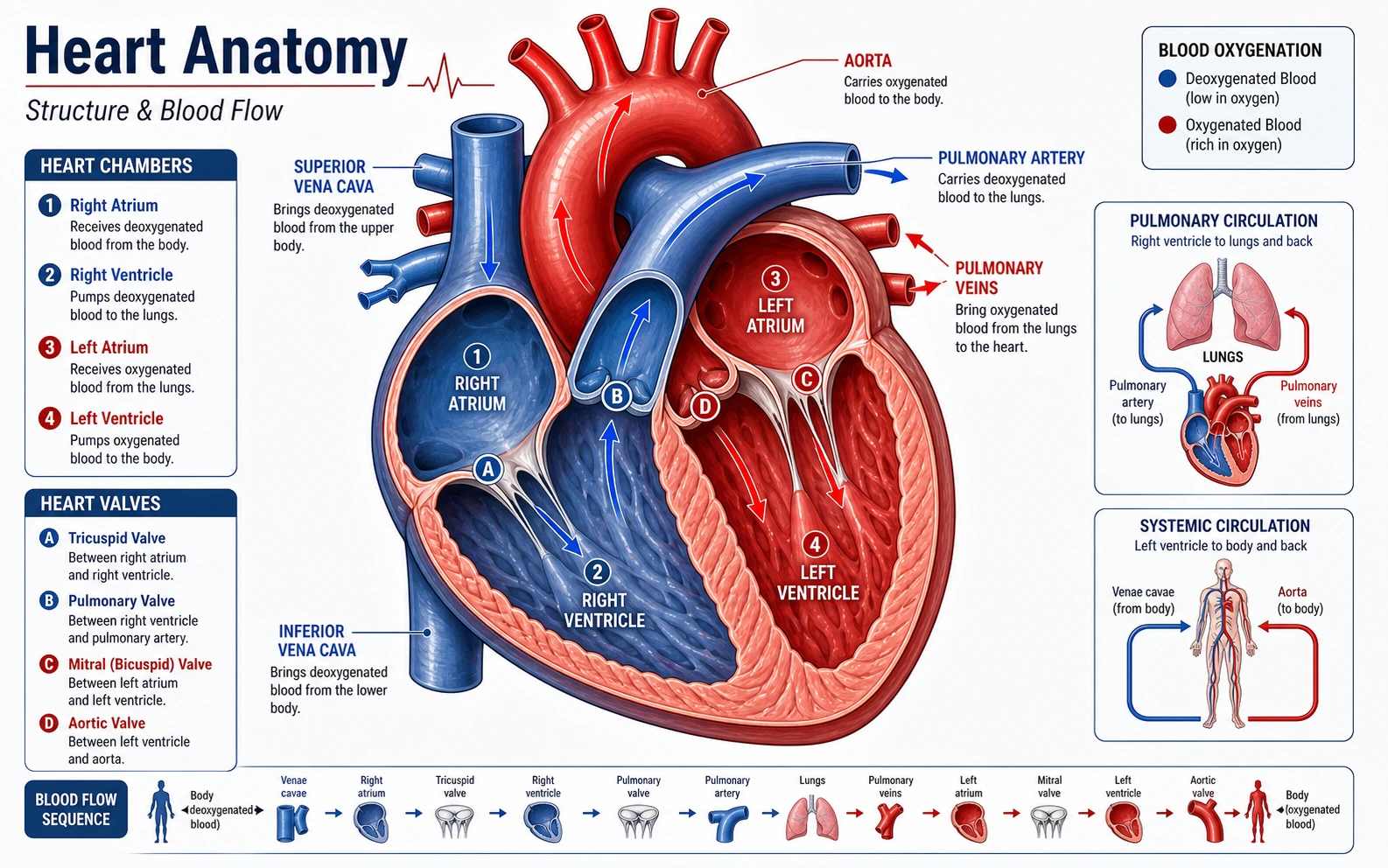 Anatomy
Create chamber, valve, and coronary anatomy figures when the focus is the heart itself.
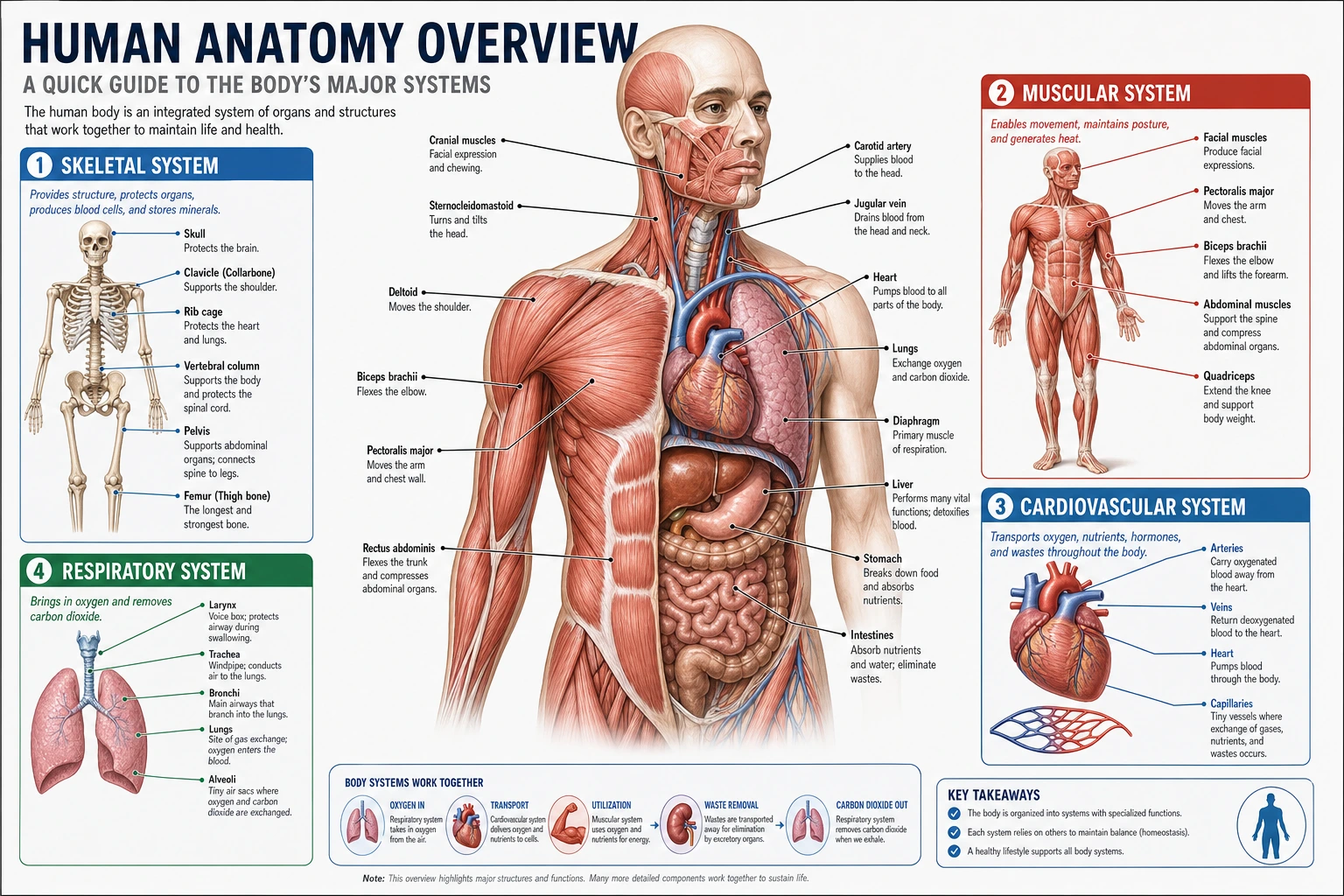 Anatomy
Build broader anatomy diagrams that combine vessels with adjacent organs, nerves, and tissues.
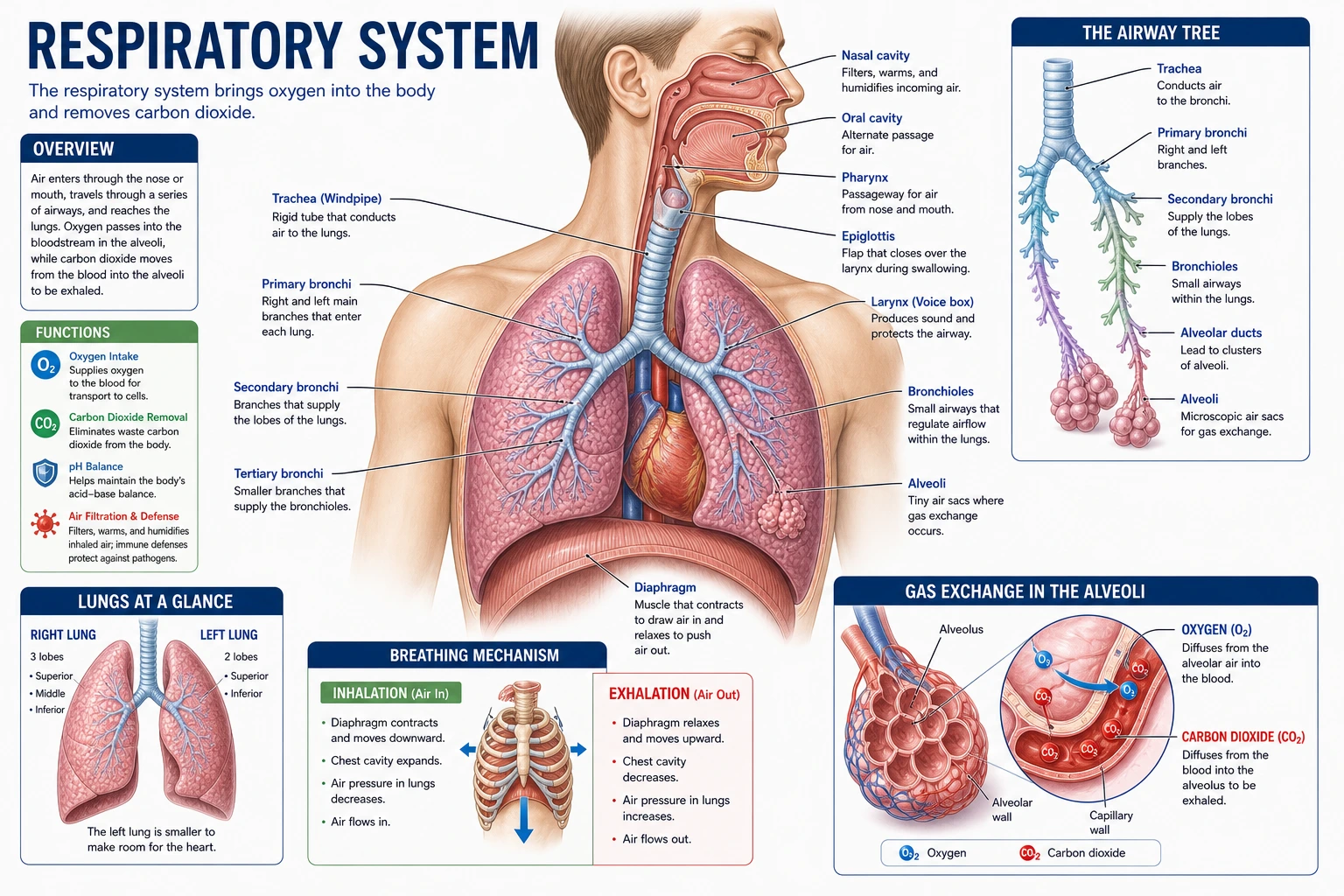 Organ System
Use this for airway anatomy, alveolar structure, and gas exchange detail alongside pulmonary flow.