
Full Survey Poster - All Systems
Full-body overview of all 11 organ systems with a shared legend and consistent labeling.
full-body
Draft full-body survey visuals that compare the 11 organ systems, show cross-system relationships, and support anatomy or physiology overview teaching before you move into a single-system page.
Free to try ·
Your diagram will appear here
Describe what you need and click Generate
Overview diagrams for organ system teaching, cross-system physiology, and full-body study.
Full-body overview of all 11 organ systems with a shared legend and consistent labeling.
Layered anterior view comparing the skeleton with major muscle groups for musculoskeletal orientation.
Integrated physiology figure tracing gas exchange in the lungs and circulation through the heart and vessels.
Feedback loop diagram linking autonomic signaling with endocrine control during the stress response.
Teaching diagram following digested nutrients from the intestinal lumen into lymphatic transport pathways.
Homeostasis figure showing how renal function supports blood volume and pressure regulation.
A whole-body systems diagram is most useful when the goal is breadth: where each system sits, how they overlap, and how structure supports broad homeostasis concepts before students move into system-specific detail.
Use it when the teaching goal is comparison or integration across systems rather than deep detail about a single organ, pathway, or specialty.
This page provides the map. Once the survey view is clear, move to skeletal, muscular, cardiovascular, respiratory, digestive, or nervous-system pages when you need higher detail within a single system.
State the body view first, then name the systems to emphasize, and finally define whether the visual is for a classroom survey, a poster, a worksheet, or a simplified explainer.
Create full-body overview charts, layered comparisons, and cross-system teaching figures for anatomy, physiology, and patient education.
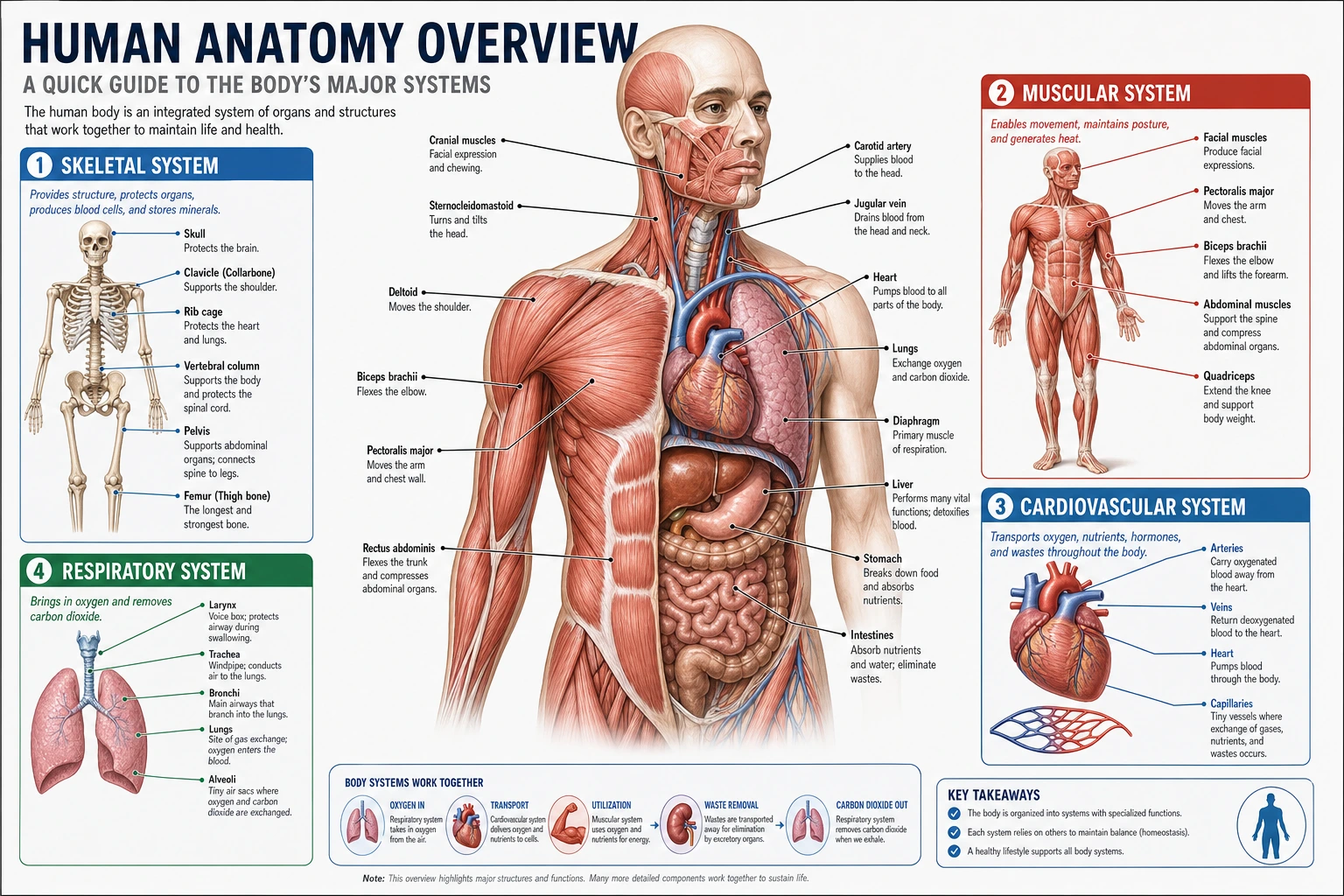 Anatomy
Create mixed regional anatomy diagrams when several systems overlap in one field.
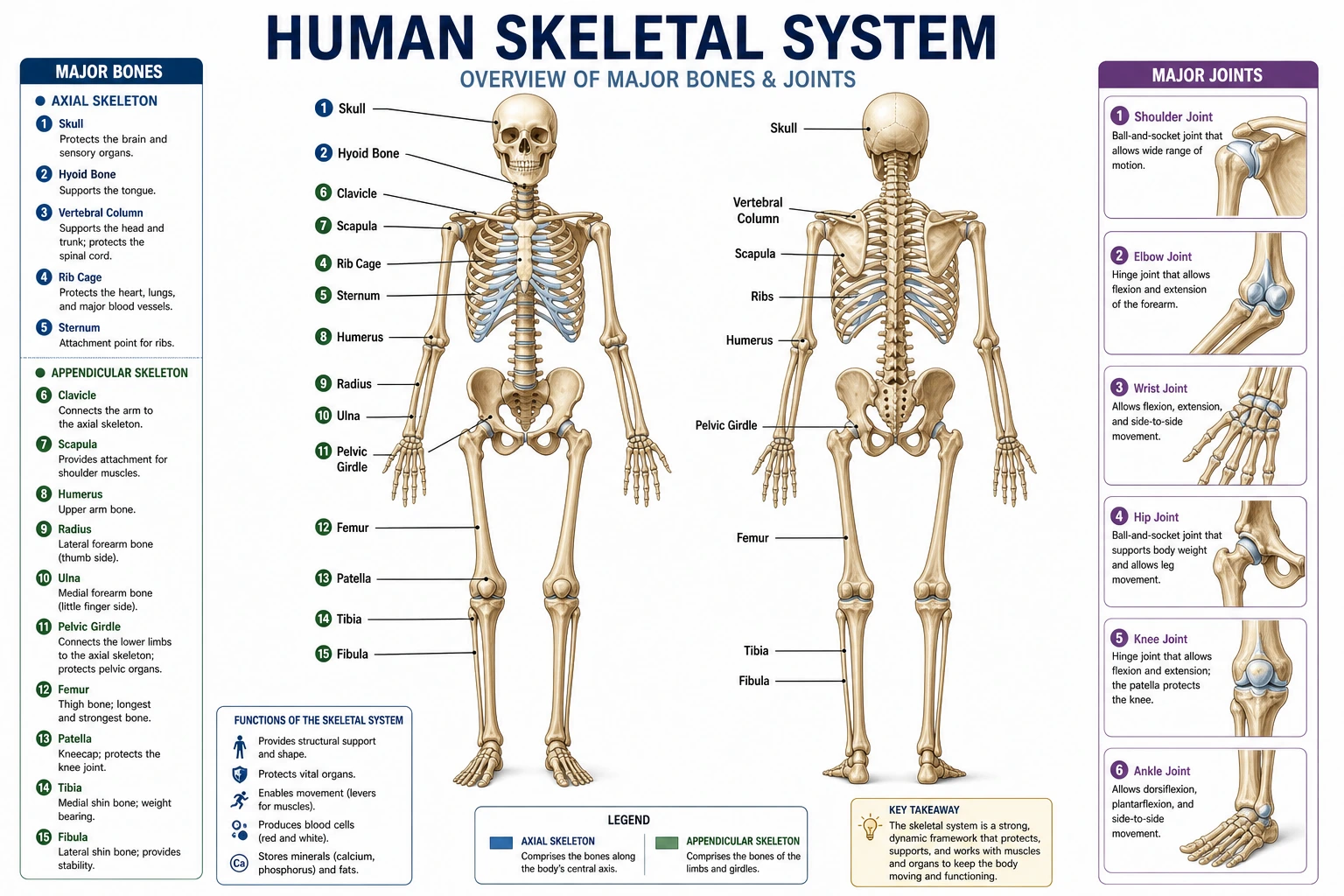 System Detail
Focus on named bones, joints, and axial versus appendicular anatomy.
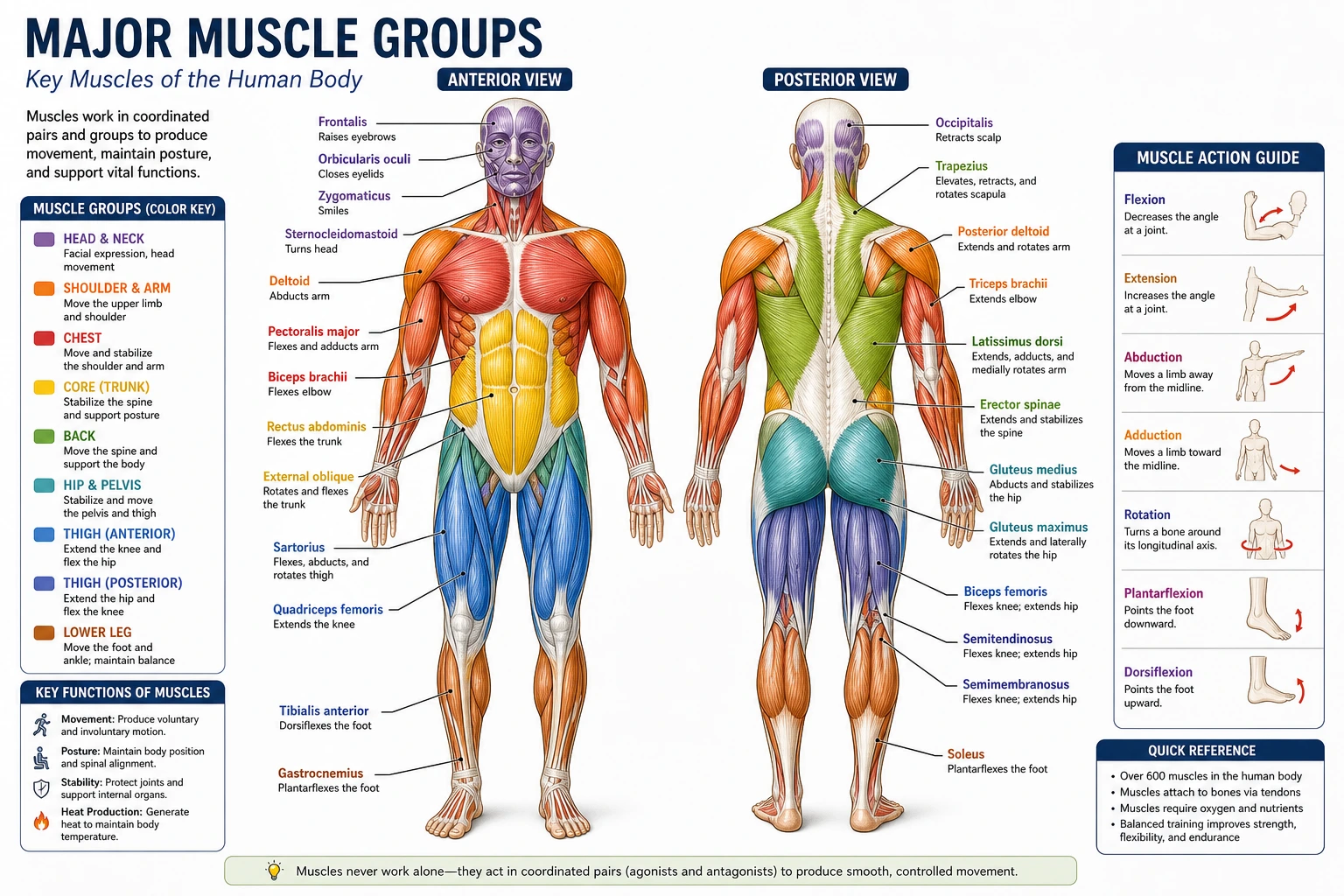 System Detail
Study muscle groups, fiber direction, origins, insertions, and layered muscle views.